Lido
Death in VeniceThe Lido is the seaside resort island where Gustav von Aschenbach’s failed departure becomes an indefinite stay, and where the daily leisure of the beach gives his fascination with Tadzio a fixed stage. A place of hotels, bathing houses, and transport links to Venice, it promises the ease of a southern holiday beside the city’s spectacle. That promise gradually darkens: the island’s repeated routines sustain Aschenbach’s obsessive watching, while the cholera hidden in Venice makes the apparent calm of resort life part of a wider atmosphere of concealment and disorder. The Lido is also where Aschenbach collapses and dies.
Setting and Arrival
Aschenbach’s first choice of an Adriatic island near the Istrian coast disappoints him. Rain, heavy air, the hotel’s provincial clientele, and the absence of a soft sandy shore leave him feeling that he has not found the place he sought. He changes course and boards a ship for Venice, drawn by the thought of reaching somewhere uniquely different overnight. His arrival by sea presents Venice as a theatrical prospect, but he does not intend to stay in the city: he asks for a gondola to take him and his luggage to the small steamers serving the Lido, because he wants to be near the sea.
The crossing makes the Lido part of a connected tourist geography rather than a remote escape. After the gondola ride, Aschenbach is directed across the island toward the shore, along a white-blossomed avenue lined with taverns, shops, and boarding houses. He enters the beach hotel through its garden and is shown a room on the third floor. Its high windows look out over the open sea, and from them he sees the comparatively deserted beach and the low, regular waves. The view makes the resort’s appeal immediate: the sea is present at the hotel itself, while Venice remains conveniently close.
The Resort’s Holiday World
The hotel and beach organize leisure into a visible routine. Aschenbach takes tea on the terrace facing the ocean, walks along the boardwalk in the direction of Hotel Excelsior, dresses carefully for dinner, and observes the guests gathered in the lobby. Their mix of languages and nationalities gives the hotel a cosmopolitan character. On the beach, the same social world opens into a public spectacle of bathing and play: children wade and swim, holidaymakers lie on the sand, and people row in small striped boats that overturn amid laughter. Bathing houses and shaded platforms separate the active shoreline from the more settled groups behind it.
The beach is not simply an empty landscape for contemplation; it is a place of shared, ordinary holiday life. Children build a sand mound and plant flags around it. Vendors kneel beside their shells, cakes, and fruit, while a Russian family occupies a bathing house, talking, joking with a candy seller, and attending to its children. The detail of these activities gives the Lido a rhythm of commerce, family, and recreation. Aschenbach can watch this life from his chair by the sea, but the people around him remain absorbed in their own company rather than in him.
A brief transportation mishap alters the length of his stay. After arriving at the railway station to leave, Aschenbach discovers that his trunk has been sent onward without him. He declares that he will not travel without it and arranges to return to the beach hotel. Twenty minutes after reaching the station, he is back on the Grand Canal, outwardly disguising his delight beneath apparent irritation. The return feels to him like a reversal that restores what he thought he had surrendered. When the luggage arrives two days later, he unpacks fully, fills the closet and drawers, and decides to remain indefinitely. The inconvenience has helped turn a temporary holiday into a settled residence.
Repetition and Watching
The Lido’s attraction lies partly in the ease and regularity of its days. Aschenbach, who has usually been driven away from holidays by restlessness and a return to work, finds that the resort relaxes his will. He spends mornings in the shelter of his bathing house, looking across the southern sea, and evenings returning from Venice to the island after hours of idleness. The familiar schedule—beach, hotel, city, and return—makes leisure feel less like a break than a world with its own reassuring order.
That order also gives Aschenbach frequent access to Tadzio. He sees the boy in the hotel, on trips between the island and Venice, in the arcades, and sometimes in the city streets, but the beach offers the most regular opportunity to watch him at length. Aschenbach comes early, before most guests, when the morning sun is still mild. He settles into his place while the sea grows bluer and the heat intensifies, waiting to see Tadzio appear among the bathing houses or discover that he is already there, wearing his blue-and-white bathing suit and moving between play and rest. Tadzio’s family calls to him from the platform as he wades, digs, swims, and brings back what he has found. The recurring scene turns the beach’s ordinary activities into the daily measure of Aschenbach’s happiness.
The repetition has consequences beyond the hours spent watching. Aschenbach no longer attends to the date when his planned vacation should end, and the thought of going home disappears. He sends for more money and becomes anxious about the possible departure of the Polish family. His sleep grows fitful: when Tadzio disappears from the scene at night, Aschenbach feels that the day is over, and at dawn he rises to await the sunrise. The resort’s predictable pattern does not bring him back to discipline; it gives his longing a schedule and keeps it in motion.
Venice, Concealment, and the Resort’s Limits
The Lido’s closeness to Venice is both an attraction and a danger. The city can be reached for an idle visit and left behind again by gondola, so the resort seems to offer sea air and repose without separation from urban spectacle. But the cholera spreading through Venice breaks the assumption that the holiday setting is insulated from the city. The outbreak is concealed by local authorities concerned about the damage that panic could do to hotels, business, and the system of exploiting foreign visitors. By the beginning of June, the pesthouse at the Ospedale Civico is nearly full, the orphan asylums have little room left, and bodies are being carried from the Fondamenta Nuove to the burial island of San Michele.
That concealment makes the Lido’s comfortable routine uneasy in retrospect. The resort remains a place of bathing, dining, and movement between island and city, even as Venice’s public story denies the danger behind those appearances. An Englishman advises Aschenbach to leave before a quarantine zone is declared; Aschenbach thanks him, but the island has already become the setting of a choice not to act on the warning. The daily holiday pattern persists alongside a threat that the authorities have tried to hide, and the resort’s easy access to Venice no longer means that its pleasures can be cleanly separated from the city’s crisis.
Death and Narrative Significance
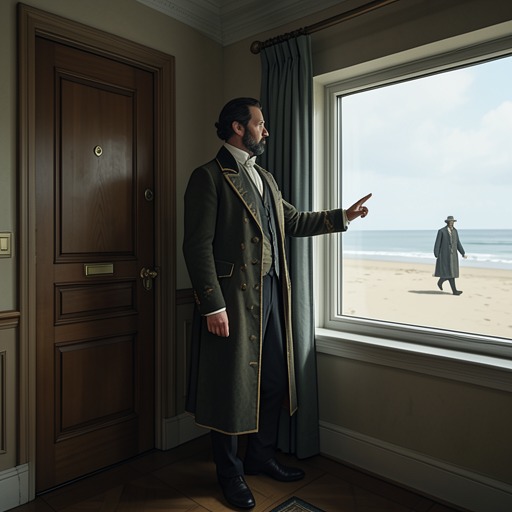
The Lido is the setting of Aschenbach’s final collapse. On the beach, Tadzio moves away from his companions, crosses the shallow water to a sandbank, and walks along the exposed strip with the open sea behind him. He turns and looks toward shore. Aschenbach, watching from his chair, reads the gesture as an invitation and rises, as he has done before, to follow. The narrative then breaks the established pattern of waiting and watching: after several minutes, someone hurries to help the man collapsed in his chair. He is taken to his room, and the news of his death is received that same day.
The resort’s structure helps give this ending its force. The Lido has made Aschenbach’s days seem to renew themselves: the beach returns each morning, Tadzio appears and disappears, and the sea remains within reach of the hotel. His death abruptly ends that recurrence. The island that first promised a manageable holiday and then accommodated an unintended, indefinite stay becomes the place where the life sustained by repeated looking finally stops.